
The Muizenberg beach huts: where they are and how to see them.
The painted huts stand on the sand at the Surfers Corner end of Muizenberg beach, two minutes from our door. Where to find them, when the light is best, and why they are not the St James bathing boxes.
Where the beach huts actually are.
The colourful beach huts stand on the sand at Muizenberg beach, at the Surfers Corner end, directly below the Beach Road beachfront strip. They are a short walk from Muizenberg station: cross from the platform to the beachfront, drop down onto the sand, and the huts are the row facing the water. There is no gate, no ticket and no queue — the beach is public and the huts are simply there.
Once you are on the sand they take about a minute to find. The pavilion and the water slides sit at one end of the beach, the surf schools and their board racks at the other, and the huts stand between the two with the mountain behind them. Empire Cafe is roughly two minutes inland at 11 York Road, so coffee before or after the walk is easy.
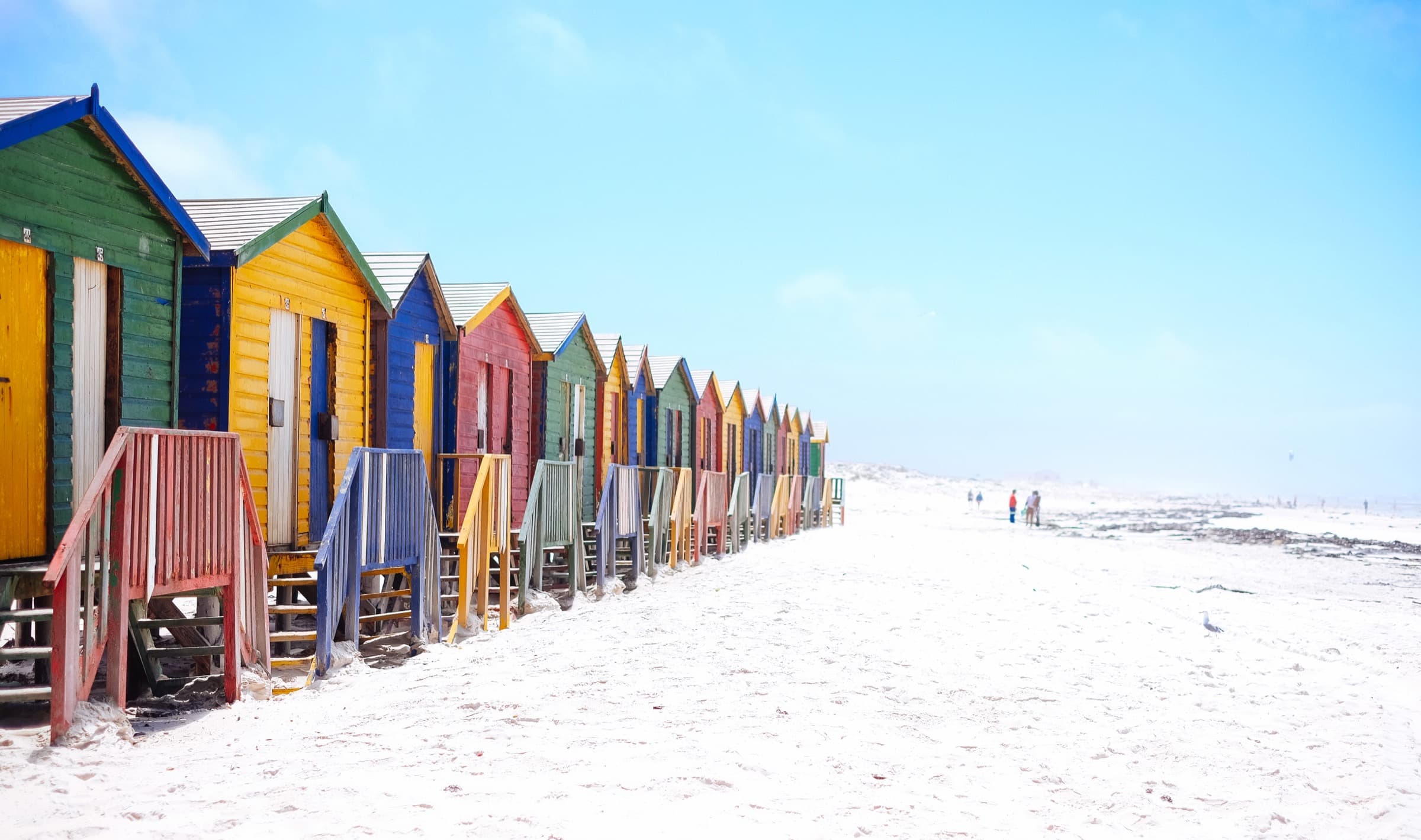
On the sand
The row you have already seen in photographs.
Yellow, blue, red and green, standing side on to the water with the mountain behind. Stand back on the wet sand at low tide and the whole row fits in one frame.
Two sets of huts
Muizenberg huts and the St James bathing boxes.
There are two sets of famous painted structures on this stretch of the False Bay coast, and search results run them together. The first is the row of huts on the sand at Muizenberg, at the Surfers Corner end. The second is the older set of Victorian bathing boxes at St James, which stand on the rocks beside the St James tidal pool, about two kilometres south along the shore.
If the picture in your head is a tight row of narrow boxes with a bright turquoise pool in front of them and rock on either side, you are thinking of St James. If it is a wide open beach, surfboards and a long flat run of sand, that is Muizenberg. Plenty of articles use one photograph to illustrate the other, which is why people walk onto Surfers Corner looking for a tidal pool that is a suburb away.
The fix is to see both. The catwalk — the paved walkway that runs along the shore between them — is flat the whole way and takes twenty to twenty-five minutes at a normal pace. Head south with the sea on your left and the railway line on your right, and you arrive at St James beach and its pool without ever leaving the coast.
Muizenberg beach huts
On open sand at the Surfers Corner end, below Beach Road. Flat access straight off the beachfront, surf schools either side, and room to stand well back for a photograph.
St James bathing boxes
On the rocks beside the St James tidal pool, roughly two kilometres south along the catwalk. Older, narrower, and almost always photographed with the pool in front of them.
Why there are bathing boxes on False Bay.
Painted timber bathing boxes are a Victorian and Edwardian seaside habit. Swimmers used them to change out of sight of the promenade, and they went up wherever a coastline turned into a resort. False Bay was exactly that sort of coast: Muizenberg was Cape Town's fashionable seaside resort in that era, which is why the Historic Mile of grand old buildings still runs along Main Road behind the beach.
The habit stuck because the water justified it. False Bay is warmer than the Atlantic side of the peninsula, the beach shelves gently, and the surf at the Corner is small and forgiving — the same three reasons the surf schools set up here a century later. Repainted and rebuilt many times over, the huts have long outlasted the swimming costumes they were put up to hide.
Timing
When to go, and when the light is best.
Muizenberg beach faces roughly south-east across False Bay, so the sun comes up over the water. That is the whole trick. In the first few hours of the day the light lands on the fronts of the huts, the colours read properly, and the sand is close to empty. By late afternoon the sun has swung behind Muizenberg mountain and the huts sit in flat shade, which makes for a good walk and a poor photograph.
The other variable is wind. The south-easter builds through summer afternoons and drives sand along the beach at ankle height, which is unpleasant to stand in and worse for a camera. Weekends and the December holidays fill the beach from mid-morning, so a mid-week morning out of season is the calmest it gets. If you want the row to yourself, come at first light — we open at 07:00 Monday to Saturday and 08:00 on Sunday, so there is coffee before and after.
Getting there
Trains, the M4, and where to leave the car.
The simplest arrival is by train. Muizenberg station sits on the Metrorail Southern Line directly across from the beachfront, so the walk from the platform to the huts is a few minutes on flat ground. By car, the M4 Main Road runs along the coast through the village. The alternative is Boyes Drive, which climbs the mountain behind Muizenberg and drops back down with the whole of False Bay laid out in front of you.
Parking is street parking, along Beach Road and the blocks behind it. It is free to find and quick to lose: on a warm weekend the beachfront bays are gone by mid-morning and you will end up a few streets inland, which is no hardship. For the full picture on trains, buses and the drive from town, read the guide to getting to Muizenberg.
Right there
What else is within a few minutes.
Surfers Corner and the surf schools are one end of the same beach, the pavilion end has the water slides and the putt putt, and the catwalk runs south to the St James tidal pool. Inland, the village blocks around York Road and Palmer Road hold the board shops, the bookshop and most of the coffee.
Make a morning of it with the things to do in Muizenberg guide, read up on the St James tidal pool before you walk over, or work out breakfast with the where to eat in Muizenberg list. If you came for the water rather than the huts, the live webcam and surf report will tell you what the Corner is doing.
Questions
Beach hut questions.
Where are the colourful beach huts in Cape Town?
On the sand at Muizenberg beach, at the Surfers Corner end, roughly half an hour from the city centre by car or on the Southern Line train. A second, older set of painted bathing boxes stands beside the tidal pool at St James, about two kilometres further south along the coast.
Are the Muizenberg beach huts the same as the St James bathing boxes?
No. They are two separate sets of painted structures about two kilometres apart. The Muizenberg huts sit on open sand at Surfers Corner; the St James boxes sit on the rocks beside the St James tidal pool. Many photographs captioned as Muizenberg are in fact of St James.
Can you go inside the beach huts?
No. The huts belong to the City of Cape Town and are kept locked. They began life as changing boxes, but they are not open to the public now and they are not huts to hire — they are there to be looked at and photographed from the public beach, so leave the doors alone.
Is it free to visit and photograph the huts?
Yes. The beach is public, there is no gate and no ticket, and photographing the huts for yourself costs nothing. Commercial and wedding shoots are a separate arrangement, so ask before you arrive with a crew.
What is the best time of day to photograph the Muizenberg beach huts?
Morning. The beach faces south-east across False Bay, so the early sun lands on the fronts of the huts and the sand is at its emptiest. By late afternoon the sun has gone behind Muizenberg mountain and the huts sit in flat shade.
How do I walk from the beach huts to St James?
Take the catwalk, the paved path that runs along the shore, heading south with the sea on your left and the railway line on your right. It is flat the whole way and takes about twenty to twenty-five minutes to the St James tidal pool.
Is there parking at Muizenberg beach?
Street parking runs along Beach Road and the blocks behind it. It fills early on warm weekends and through the December holidays, so come early or expect to leave the car a few streets inland and walk in.